How a secret mountain base in Rust survived a full wipe without a single raid
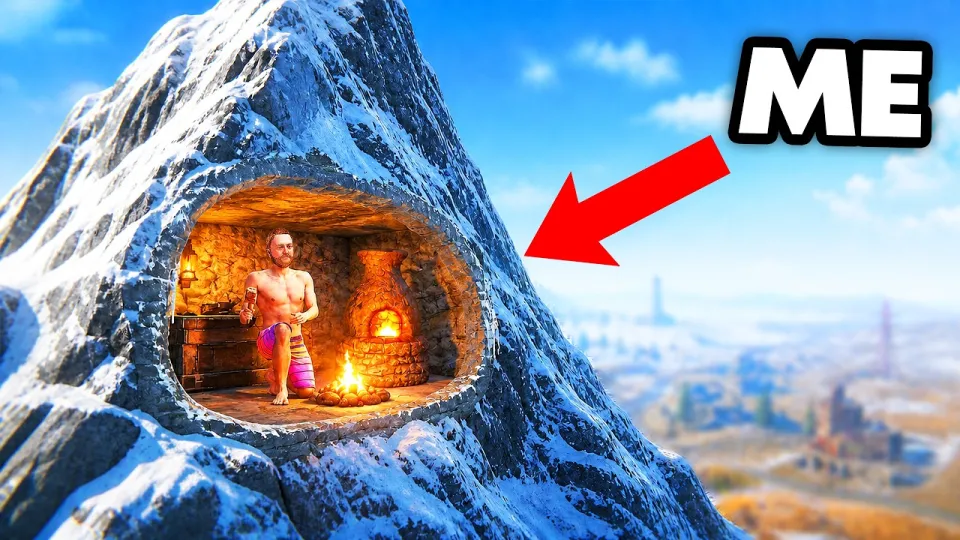
Video: I Lived in a Secret Mountain Base in Rust
Need articles like this for your video? They help promote it on YouTube and Google — order them in the Telegram bot @sat_sit_bot. It writes articles around your video, embeds the video and publishes them on popular niche websites (no ads). Try it free: 50 articles on us.
· based on the channel Memeio
A secret mountain base in Rust is a small, low-profile structure built on uneven terrain and camouflaged against rock so that passing players simply do not register it as a base. The idea is not to be invisible but to be uninteresting: if a raider never notices the base, no amount of stone, sheet metal or turrets matters. Memeio's wipe experiment on a mountain is a good excuse to break down what actually makes this work, and the channel's updates are posted at Memeio on X.
What a secret mountain base in Rust actually is
A secret mountain base is a footprint problem before it is a building problem. Most players build a 2x2 or 2x1 with a triangle airlock, honeycomb it, and place it on the flattest ground they can find — which is exactly where every other player looks. A mountain base flips that logic: you accept awkward terrain, cramped interiors and a longer walk to monuments in exchange for being outside the standard search pattern.
The category includes several variants:
- A rock pocket base wedged between two boulders, with walls filling the gaps.
- A small structure on a ledge that is only reachable from one side, so the approach itself is a chokepoint.
- A base sunk into a slope so only the roof and a door are visible from below.
- A "trap" variant where the entrance is bait and the real loot sits behind a second, less obvious door.
What unites them is scale. A 1x1, 1x2 or 2x1 with a single loot room is cheap, fast to rebuild and worthless enough that most raiders will not spend the sulfur. The trade-off is real: you lose space for furnaces, large boxes and a workbench, and you will be ferrying resources more often than a clan player.
Location scouting before the first foundation
Location choice decides most of the outcome, and it is worth spending the first twenty minutes of a wipe on it. The goal is a spot that is hard to see from the main travel routes but still close enough to a road, a monument or a recycler to make the wipe playable.
A practical scouting checklist:
- Walk the mountain from the bottom, not the top. You want to know what a passing player sees at eye level.
- Look for terrain that breaks the silhouette: boulders, dead trees, cliff overhangs, snow patches.
- Avoid flat plateaus and peaks. Anything that reads as a clean building spot has already been checked by everyone else.
- Check the map for nearby monuments and roads; a base nobody finds is useless if every trip is a five-minute run.
- Note how many other bases are within sight. Being the third base on a ridge is worse than being the only one on a slope.
One recurring criticism of hidden-base videos is fair: a structure perched on top of a mountain fifteen feet from two other bases is not hidden, it is just high. The camouflage has to match the terrain, not fight it.
Camouflage that works and camouflage that does not
Camouflage in Rust is about breaking shape and colour, and the strongest tool is a low, irregular outline. A square box on a rock reads as player-made instantly, even at distance, because nature does not produce right angles.
Things that genuinely help:
- Keep the structure low, ideally one storey, and let terrain hide at least one wall.
- Use stone or wood that matches the local palette; a bright sheet-metal roof on grey rock is a beacon.
- Avoid external signs of activity: no visible furnaces, no lanterns, no large boxes seen through a window.
- Skip windows entirely. A window is a free look into your loot room and a free angle for a raider.
- Place doors facing away from the most likely approach direction.
Things that do not help, despite what base tours claim: painting a base to match a rock at point-blank range, stacking it with decorative clutter, or building on the highest point of the map. Hiding behind your own hands works about as well in Rust as it does for a toddler, and viewers tend to say so bluntly.
The economy of being too small to raid
Raiding is an economic decision, and a hidden mountain base wins by making the expected profit negative. Raiders weigh sulfur cost against the odds of finding explosives, guns or a stocked workbench. A 2x1 with a single small box rarely clears that bar, especially when it is a long walk from the nearest spawn or outpost.
Some rules that keep the numbers in your favour:
- Never store everything in one room. Split loot between the main base and one or two stashes or secondary 1x1s.
- Keep the visible part of the base poor. A raider who blows one door and finds a bow and some stone will usually stop.
- Rebuild fast. A destroyed 1x2 costs minutes, not hours, and the location is already scouted.
- Do not upgrade everything to sheet metal. High-quality walls signal high-quality loot.
- Move valuable items out after big runs rather than letting them sit overnight.
Early-game efficiency matters here too. A well-known eco-raiding trick: broken wooden spears can be crafted into stone spears, so with a bit of stone you effectively double the number of spears you carry. Make sure the broken spears sit ahead of the unbroken ones in your inventory so the craft order works in your favour. That kind of small optimisation is what lets a solo player on a mountain compete with groups.
Common doubts about hidden bases, answered
Most scepticism about secret mountain bases is legitimate, and it falls into a few recurring themes.
"Isn't it visible anyway?" Often yes. A base that sticks out from the skyline is not hidden, and players who claim otherwise are usually grading themselves generously. The test is simple: stand at the bottom of the mountain and screenshot the slope. If you can spot your base in the image in under five seconds, so can a raider.
"What about cheaters?" No camouflage beats ESP or aimbot. A cheater sees your boxes through rock regardless of how well the base blends in, and that is the one threat a hidden base cannot answer. It is a reason to keep loot spread out, not a reason to abandon the strategy.
"Isn't it too small to live in?" It is small, and that is the point. You will make more trips, use fewer furnaces and rely on stashes and secondary bases. Players coming from Ark or other survival games often recognise the pattern: a 1x2 tucked into a terrain gap can survive wipes on official servers simply because nobody bothers.
"Does the trap base angle still work?" Trap bases are a separate discipline and they attract attention by design. Combining a trap entrance with a hidden loot room is viable, but expect company; the fun of watching raiders rage is exactly the attention a hidden base is trying to avoid.
Why the format keeps working
Hidden-base content works because it inverts the usual Rust power fantasy. Most videos chase bigger bases, more turrets and larger raids; a mountain wipe is about restraint, patience and reading terrain. That is also why viewers who have no intention of installing Rust still watch — the decision-making is legible even if the mechanics are not.
The recurring joke about conveniently finding a batch of time-saving loot early in a video is part of the genre's charm, and so is the moment a creator who spent years mocking hidden bases finally builds one. The lesson underneath the entertainment is genuinely useful: the best raid defence is never being raided, and the way to achieve that is a location nobody thinks to check.
Useful links
- Memeio on X — channel updates, clips and announcements.
- Epidemic Sound — the music library credited for the video's soundtrack.
Bottom line
A secret mountain base in Rust is less about camouflage tricks and more about economics and terrain reading. Pick an awkward spot, keep the footprint small, keep the visible loot poor, and spread anything valuable across stashes and secondary bases. Accept that cheaters and determined neighbours will still find you, and that the strategy trades comfort for survival odds. Memeio's mountain wipe is a clean demonstration of that trade-off, and the channel's X account is where the next experiments get announced.
Key takeaways
- A hidden mountain base in Rust works because it removes the base from the raider's decision loop, not because it is invisible.
- The strongest camouflage is a low, uneven silhouette that blends with rock and terrain instead of a boxy 2x2 sticking out of a peak.
- Broken wooden spears can be recycled into stone spears, effectively doubling spear count for early eco-raids.
- Small bases reduce raid profit: a 1x2 or 2x1 with no obvious loot room is rarely worth the sulfur.
- Cheaters remain the main threat to any hidden base; no camouflage stops ESP or aimbot users.
Source: I Lived in a Secret Mountain Base in Rust · Markdown version
Questions & answers
Is a secret mountain base in Rust actually hidden from other players?
It is hidden from players who are not actively searching, which is most of them. A low structure that blends into rock and sits off the main travel routes will often go unnoticed for a whole wipe, but anyone sweeping the mountain or using ESP will find it quickly.
How big should a hidden base be to avoid being raided?
A 1x1, 1x2 or 2x1 with one loot room is the sweet spot. The goal is to keep the sulfur cost of raiding higher than the expected loot, so a small footprint with cheap visible contents is usually enough to make raiders move on.
What is the best camouflage for a mountain base?
A low, irregular silhouette that follows the terrain. Keep the structure to one storey, use materials that match the local rock or snow, avoid windows, and make sure no furnace, lantern or large box is visible from outside.
Can a hidden base survive cheaters?
No camouflage stops ESP or aimbot users, since they see through terrain regardless. The practical defence is spreading loot across stashes and secondary bases so a single raid does not end the wipe.